(425) 318-7912
 MY ACCOUNT
 425-318-7912

Fruit flies won’t go away because their eggs and larvae are hiding in places most people never clean, like drains, trash residue, and fermenting food scraps. Killing the visible flies isn’t enough.
Real fruit fly control requires eliminating breeding sites, improving food storage, and combining traps with sanitation. Once those sources are removed, infestations collapse quickly instead of returning every few days.
Have you ever cleaned your kitchen and still seen fruit flies reappear overnight? Today we’re taking a closer look into why infestations persist and the practical steps that actually stop the cycle instead of temporarily masking it.
Why Won’t Fruit Flies Go Away?
Fruit flies stick around when their breeding sites stay active. There are four common reasons fruit flies keep returning:
- Hidden breeding spots
- Rapid life cycle
- Incomplete cleaning habits
- Overreliance on traps
Hidden Breeding Spots
Fruit flies don’t need a visible mess to survive. A thin layer of residue inside a drain or garbage disposal can feed hundreds of larvae.
Recycling bins often hold sticky liquid that people overlook. Mop buckets, sponges, and trash can rims collect organic film that stays damp for days.
A small pocket of fermenting material is enough to support a fruit fly infestation. Wiping counters helps, yet hidden buildup keeps the population alive.
Rapid Life Cycle
Fruit flies mature fast. Eggs hatch quickly in warm kitchens. New adults appear before people realize larvae were present.
Killing flying insects only removes one stage of the problem. Without interrupting the life cycle, new generations replace the old ones almost immediately. That speed makes infestations feel endless.
Incomplete Cleaning Habits
Surface cleaning looks effective, yet fruit flies feed on residue that isn’t visible. Produce juices drip behind appliances.
Trash bags leak into cabinet bases. Forgotten scraps inside sink strainers ferment quietly. Regular pest control routines fail when those areas stay untreated.
Overreliance on Traps
Fruit fly traps catch adults, yet they don’t eliminate the breeding source. Traps reduce numbers for a short time.
New flies emerge from hidden larvae and refill the space. Traps work best when paired with sanitation, not used as the only strategy.
Why Are Fruit Flies So Bad in September?
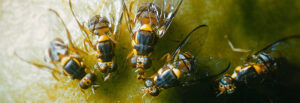
(Fruit fly, image from cdfa.ca.gov)
Fruit flies thrive in warm, moist air. September often holds onto summer temperatures while adding extra humidity. Heat shortens the time it takes for eggs to hatch.
A faster cycle means more adults appear in less time. Kitchens stay active breeding zones when drains and trash stay damp.
Moisture gives larvae a stable place to grow. That environment makes it harder to prevent fruit flies without steady cleaning.
Overripe Harvest Produce
Late summer brings an overload of fresh fruit. Farmers markets, gardens, and grocery sales encourage people to stock up. Produce ripens quickly once it sits on a counter.
Soft fruit releases sugars that ferment in the air. Fruit flies detect those scents from far away. A single overlooked banana or tomato can support an entire colony. Natural pest repellents help reduce attraction, yet food storage habits still matter most.
Increased Airflow from Open Homes
Many households open windows during cooler evenings. Fresh air feels great, yet it gives insects an easy entry point. Screens don’t block every fly.
Fruit flies slip through tiny gaps and head straight toward food odors. Once inside, steady temperatures let them settle and reproduce. Consistent pest control routines become more important during early fall.
Fruit Fly Control: How to Fix the Problem for Good
A lasting solution comes from removing breeding sources and blocking future access. Quick fixes don’t stop the cycle. Fruit fly control works when sanitation, storage, and prevention happen together.
There are four actions that end recurring outbreaks:
- Deep cleaning hidden areas
- Smarter food storage
- Daily prevention habits
- Combined control methods
Deep Cleaning Hidden Areas
Fruit flies lay eggs where organic film collects. Drains, garbage disposals, and trash can seams hold sticky residue that rinsing won’t remove.
A stiff brush and hot water clear buildup from sink walls. Trash bins need full washing, not just bag replacement.
Appliance edges trap juice that ferments over time. Cleaning those zones removes the nursery that supports a fruit fly infestation.
Smarter Food Storage
Produce left exposed invites insects to settle. Refrigeration slows ripening and reduces odor. Sealed containers protect fruit that stays on counters.
Compost needs tight lids and frequent emptying. Clean storage cuts off the scent trail that attracts new flies and helps prevent fruit flies from returning.
Daily Prevention Habits
Small routines make a difference. Wipe spills right away. Rinse bottles before recycling. Empty trash before it smells.
Dry sinks and sponges each night. Natural pest repellents like essential oil sprays can discourage activity, yet they work best alongside sanitation.
Combined Control Methods
Traps, cleaning, and repellents work stronger as a group. Fruit fly traps reduce the adult population while sanitation stops the next generation. Consistent pest control habits keep kitchens from turning into breeding zones again.
Frequently Asked Questions
Where Do Fruit Flies Come From if My House Is Clean?
Fruit flies often enter homes on produce that already carries eggs. Grocery stores, warehouses, and shipping centers expose fruit to insects long before it reaches a kitchen.
Eggs are tiny and invisible to the eye. A clean home doesn’t stop them from hatching once fruit ripens.
Compost containers and recycling bins can introduce them as well. A fruit fly infestation can start from a single overlooked source.
Can Fruit Flies Live in Drains Permanently?
Drains create a stable environment when organic film builds up along the pipe walls. Moisture and food residue support larvae without interruption.
Colonies can survive for long periods if cleaning never reaches that layer. A steady stream of adult flies near a sink often signals a hidden drain population. Routine pest control for plumbing prevents long-term nesting.
Explore Natural Pest Repellents
Lasting fruit fly control comes from steady cleaning, smart storage, and prevention that blocks future colonies.
For more than 50 years, our team at Eastside Exterminators has protected Seattle homes with eco-friendly pest control built on local experience and long-standing community trust. As a family-owned company, we treat every customer like a neighbor, not a number. We focus on safe, effective solutions that work for real households.
Get in touch today to find out how we can help with your pest control!